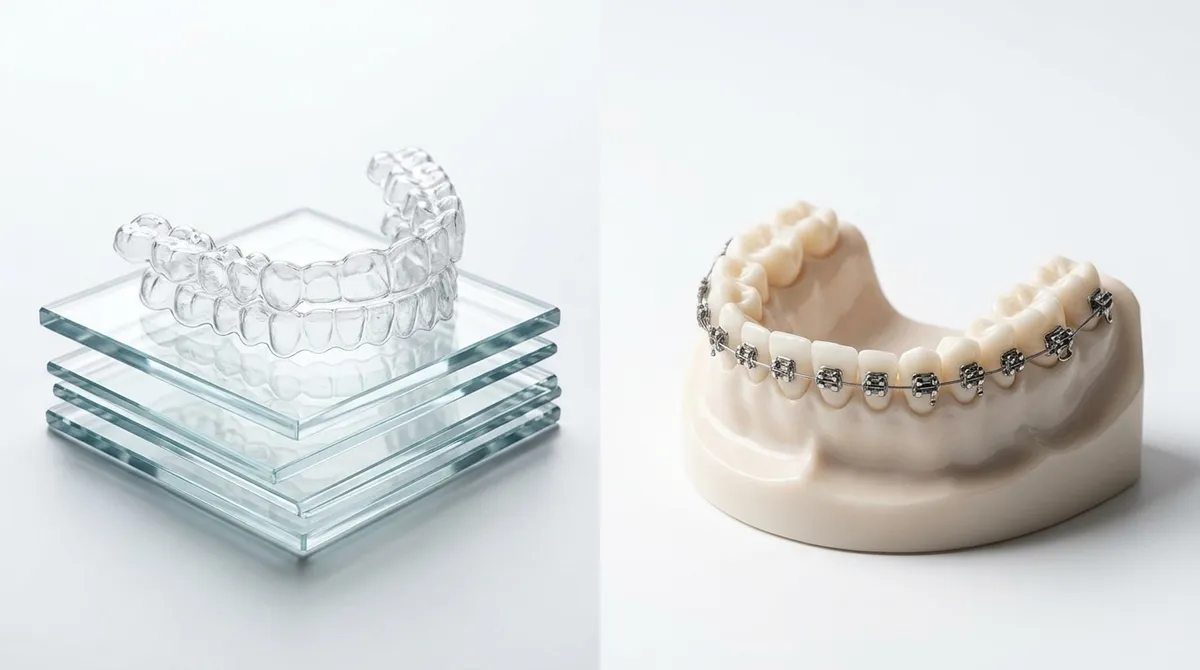
Key Takeaways
-
Clear aligners require 22 hours daily wear to be effective, while braces work 24/7 without patient compliance needed—choose aligners only if you're disciplined enough to wear them consistently.
-
Clear aligners average 18 months treatment vs braces at 24 months, but both achieve 88-90% success rates; treatment time varies based on case complexity and patient compliance.
-
Aligners work best for mild-to-moderate cases and adults seeking discretion, while braces are essential for severe crowding, complex bite problems, and children under 12 who lack the discipline for removable trays.
-
Oral hygiene is significantly easier with aligners—you remove trays and brush normally—whereas braces require careful cleaning around brackets and avoiding sticky/hard foods.
-
Both treatments cost $3,000-$6,000 with similar pricing; the cheapest option isn't always most effective for your specific bite, so consult an orthodontist to match treatment to your actual dental needs.
-
Adults are the primary candidates for clear aligners due to lifestyle flexibility and excellent compliance, while teenagers require honest assessment of maturity level to succeed with removable trays.
Choosing between aligners vs braces is one of the most common questions we hear at orthodontic practices. Whether you’re a parent exploring options for your child or an adult ready to finally fix your smile, this decision matters. Both treatments work — but they work differently, and one may be a better fit for your unique situation.
The good news? There’s no wrong answer here. Both braces and clear aligners have helped millions of people achieve healthy, confident smiles. The key is understanding how each option works so you can make the smartest choice for your lifestyle, budget, and treatment needs.
Let’s break it all down in a simple, friendly way so you walk away knowing exactly what to expect from each treatment path.
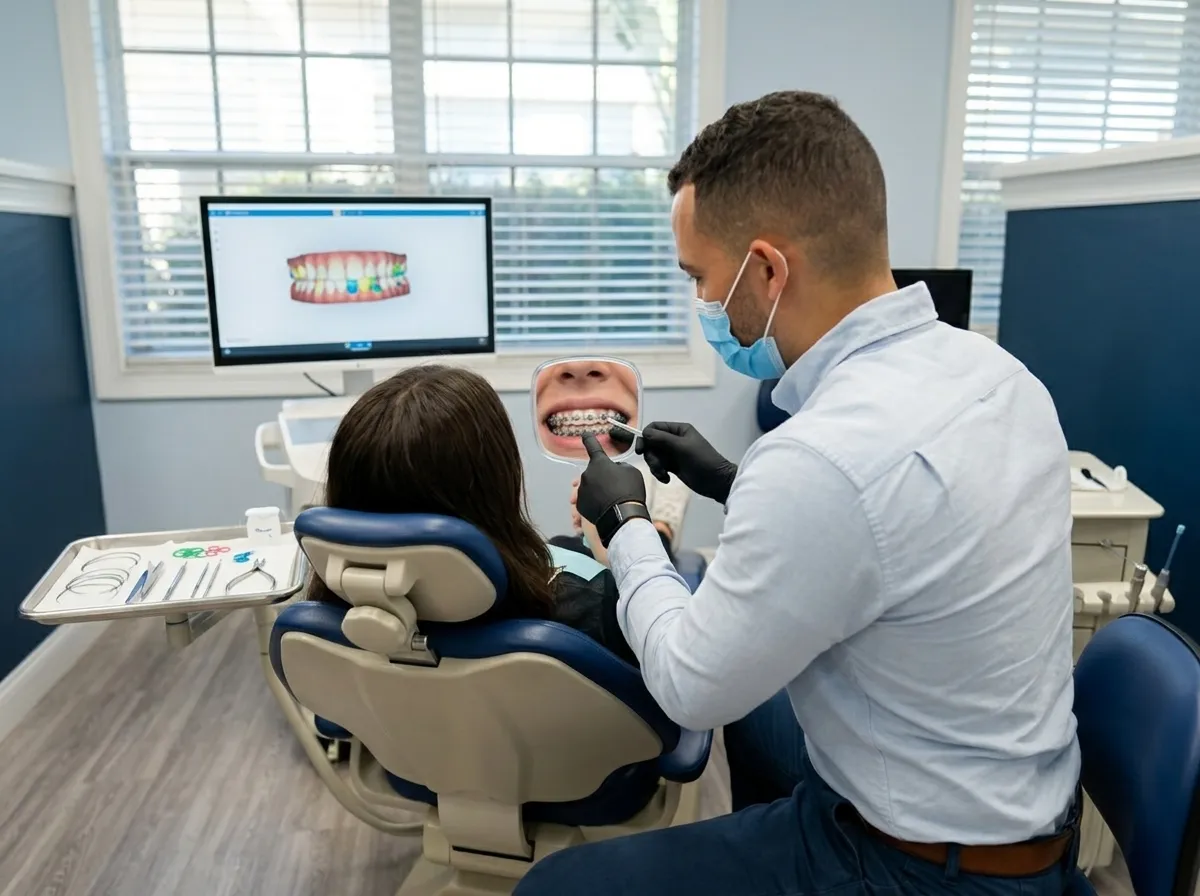
What Are Braces and How Do They Work?
Traditional braces use small metal or ceramic brackets that bond directly to your teeth. A wire runs through those brackets, and your orthodontist adjusts it over time to gradually move your teeth into the correct position. You can also explore traditional braces and how they work in more detail to see if they might be the right fit for you.
Because braces are fixed to your teeth, they work around the clock without any effort from you. That’s a huge advantage. You don’t have to remember to put them in or worry about losing them.
Braces are especially effective for:
- Severe crowding or spacing issues
- Complex bite problems like overbite, underbite, or crossbite
- Significant tooth rotations
- Cases where precise, detailed control is needed
- Younger patients who may not yet have the discipline for removable trays
If you’re exploring modern braces options for your teen, check out the 3 best braces for teens: options, costs, and results to compare what’s available today.
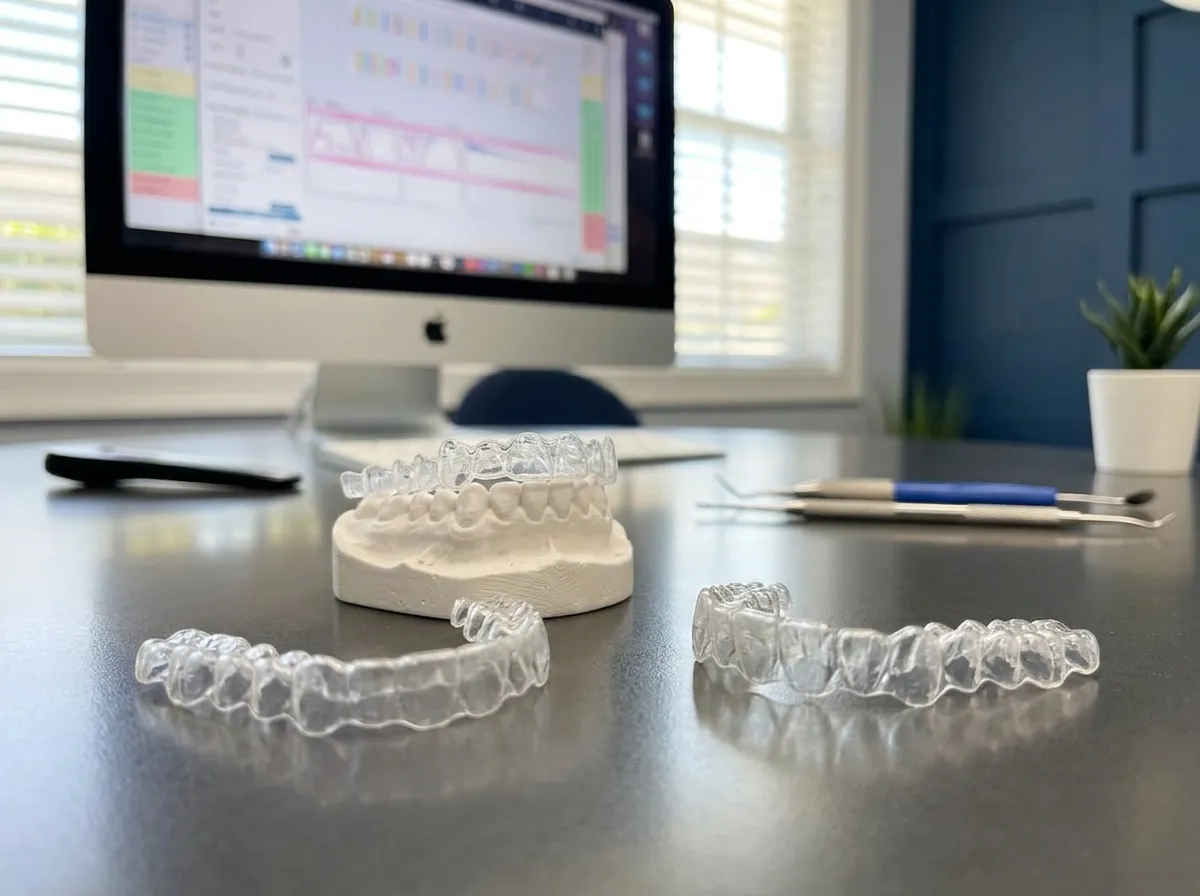
What Are Clear Aligners and How Do They Work?
Clear aligners are custom-made, removable plastic trays that gently shift your teeth over time. You wear each set of trays for about one to two weeks before moving on to the next set in the series. The trays are nearly invisible, which is why so many adults and teens love them.
If you’re curious about the mechanics behind this treatment, our page on how Invisalign clear aligners actually work is a great place to start.
Clear aligners work best for:
- Mild to moderate crowding or spacing
- Adults who want a discreet treatment option
- Teens who are responsible enough to wear them consistently
- Patients who want the flexibility to remove trays for meals and photos
- People who value easy oral hygiene during treatment
For a deeper look at your options, browse our clear aligners page or learn more about Invisalign treatment at Torres Orthodontics.
Aligners vs Braces: A Side-by-Side Comparison
Here’s a quick comparison to help you see the key differences at a glance:
| Feature | Clear Aligners | Braces |
|---|---|---|
| Visibility | Nearly invisible | Visible brackets and wires |
| Removable? | Yes — take out for meals | No — fixed to teeth |
| Compliance Required | Must wear 22 hours/day | No action needed from patient |
| Best For | Mild to moderate cases | Moderate to complex cases |
| Oral Hygiene | Easy — brush and floss normally | More involved — work around hardware |
| Average Treatment Time | ~18 months | ~24 months |
| Comfort | Smooth plastic trays | Brackets may irritate cheeks early on |
| Diet Restrictions | None — remove to eat | Avoid hard, sticky, chewy foods |
How Long Does Each Treatment Take?
One of the biggest questions people ask is: how long will this take? The answer depends on the complexity of your case, but research gives us a helpful baseline.
A retrospective study found that clear aligner treatment averaged about 18 months, while conventional braces averaged around 24 months. However, both treatments showed very strong results — with 88–90% success rates for correcting malocclusion. That’s encouraging news no matter which path you choose!
| Treatment Type | Average Treatment Time | Success Rate |
|---|---|---|
| Clear Aligners | ~18 months | 88–90% |
| Traditional Braces | ~24 months | 88–90% |
Keep in mind, these are averages. Your actual treatment time depends on how your teeth respond to movement, how consistently you wear aligners (if that’s your choice), and how complex your bite issues are. Learn more about common mistakes that slow down your braces timeline so you can avoid them.
Which Option Is Right for Different Ages?
For Children and Pre-Teens
Young children and pre-teens often benefit most from braces. Kids around ages 7–12 who need early orthodontic treatment typically do well with fixed appliances because compliance is less of a concern. Braces also offer more control for growing jaws and developing bite patterns. Check out our guide to braces for kids: what every parent should know.
For Teenagers
Teens can do well with either option, depending on their maturity and treatment needs. Braces are reliable because they don’t depend on a teen remembering to put trays back in. That said, motivated teens who want a more discreet option often love clear aligners. The key is an honest conversation with your orthodontist about which suits your teen’s lifestyle best.
For Adults
Adults are actually the biggest fans of clear aligners — and for good reason! The ability to remove trays for professional meetings, photos, and dates is a huge lifestyle bonus. Adults also tend to have excellent compliance, making aligners a very effective choice. If you’re an adult considering treatment, explore our adult orthodontics page or read about 7 things to know about adult orthodontics in 2026.
Cost: What Should You Expect to Pay?
Cost is always an important factor in this decision. At Torres Orthodontics, both braces and clear aligners are generally priced between $3,000 and $6,000, depending on the complexity of your treatment. The specific cost varies based on your case, the type of appliance used, and your insurance coverage.
| Treatment | Estimated Cost Range | Insurance Coverage |
|---|---|---|
| Metal Braces | $3,000 – $5,500 | Often partially covered |
| Ceramic Braces | $3,500 – $6,000 | Sometimes covered |
| Clear Aligners | $3,500 – $6,000 | Sometimes covered |
We accept most major PPO dental insurance plans, including Delta Dental, Blue Cross Blue Shield, Aetna, Guardian, MetLife, and UnitedHealthcare. We also accept Medicaid and offer flexible monthly payment plans. For a full breakdown, visit how much do braces cost or check out how much Invisalign costs in 2026. You can also learn more about orthodontic financing and how to make braces affordable.
Oral Hygiene During Treatment
Keeping your teeth clean during orthodontic treatment is important for your long-term dental health. Here’s how hygiene compares between the two options:
With clear aligners:
- Remove the trays before eating or drinking anything other than water
- Brush and floss your teeth as you normally would
- Rinse or clean your trays before putting them back in
With braces:
- Brush carefully around each bracket after every meal
- Use floss threaders or a water flosser to clean between teeth
- Avoid foods that get stuck in your brackets (sticky candy, popcorn, hard foods)
Aligners do offer a clear advantage when it comes to oral hygiene. You clean your teeth normally, which makes it easier to prevent cavities and gum problems during treatment.
Common Mistakes to Avoid When Choosing
Before you make a final decision, here are some key mistakes to steer clear of:
- Choosing aligners if you know you won’t wear them consistently. They must be worn about 22 hours per day to work. Skipping trays slows your results.
- Assuming braces are only for kids. Braces work beautifully for adults — in fact, more adults than ever are getting braces in 2026. Read about why so many adults are getting braces.
- Skipping your orthodontist consultation. Only a board-certified orthodontist can tell you which treatment will actually work for your specific bite and alignment needs.
- Ignoring retainers after treatment. Both treatments require a retainer to keep your results. Learn more at what retainers do after braces or aligners.
- Choosing based on cost alone. The cheapest option isn’t always the most effective for your case. Let your orthodontist guide you to the right choice.
For even more insight, check out 5 braces vs aligners mistakes that could cost you your smile.
Why Torres Orthodontics Is the Right Choice
At Torres Orthodontics, Dr. Rodney Torres and his team take the time to understand your goals before recommending any treatment. Whether you’re leaning toward braces or clear aligners, you’ll get a personalized plan built around your smile, your schedule, and your budget.
With locations in Tampa, Miami Lakes, and Boca Raton, FL, we make it easy for the whole family to get the care they need. Patients at our Miami Lakes location love the warm, relaxed environment — and you can visit us on Google — Torres Orthodontics Miami Lakes to read real reviews from real patients. You can also follow our latest patient stories and smile transformations on our Torres Orthodontics Instagram page or catch helpful tips on our Torres Orthodontics YouTube channel.
We use advanced digital tools including 3D treatment planning and digital impressions to give you accurate, comfortable care from day one. Explore our advanced technology to see how we deliver better results with less guesswork.
Your Next Step Toward a Beautiful Smile
The aligners vs braces debate doesn’t have to be stressful. Both options can give you the straight, healthy smile you’ve always wanted. The best choice is simply the one that fits your teeth, your lifestyle, and your goals — and an experienced orthodontist can help you figure that out in one visit.
Ready to find out which treatment is right for you? Schedule your free consultation at Torres Orthodontics today and take the first step toward your best smile. We can’t wait to meet you!
You can also stay connected and get smile inspiration by checking out our Torres Orthodontics Facebook page and connecting with our community there.
FAQs
Q: Are aligners better than braces for adults?
A: Clear aligners are a fantastic choice for most adults! They’re nearly invisible, easy to remove for meals and social events, and make oral hygiene a breeze. That said, if you have a more complex bite issue, your orthodontist may recommend braces for better results — so it always helps to get a professional opinion first.
Q: Can clear aligners fix an overbite or underbite?
A: Yes, clear aligners can treat many bite issues including mild to moderate overbites and underbites. However, severe bite problems may respond better to braces, which give your orthodontist more precise control over tooth movement. The best way to find out is with a free consultation at your orthodontist’s office!
Q: What happens if I forget to wear my aligners?
A: Missing hours here and there can slow down your treatment and throw off your timeline. Clear aligners need to be worn about 22 hours per day to stay on track. If you know you’re likely to forget, braces might actually be the more reliable option since they work 24/7 without any effort from you.
Q: How do I clean my teeth with braces vs aligners?
A: With aligners, you simply remove the trays and brush and floss as usual — super easy! With braces, you’ll need to brush carefully around each bracket and use floss threaders or a water flosser to clean between teeth. Both approaches keep your smile healthy as long as you stay consistent.
Q: Are aligners cheaper than braces?
A: Both treatments are typically in a similar price range — roughly $3,000 to $6,000 depending on your case complexity and location. At Torres Orthodontics, we offer flexible payment plans and accept most major insurance plans plus Medicaid, so treatment is more accessible than you might think. A free consultation can give you a personalized cost estimate!


